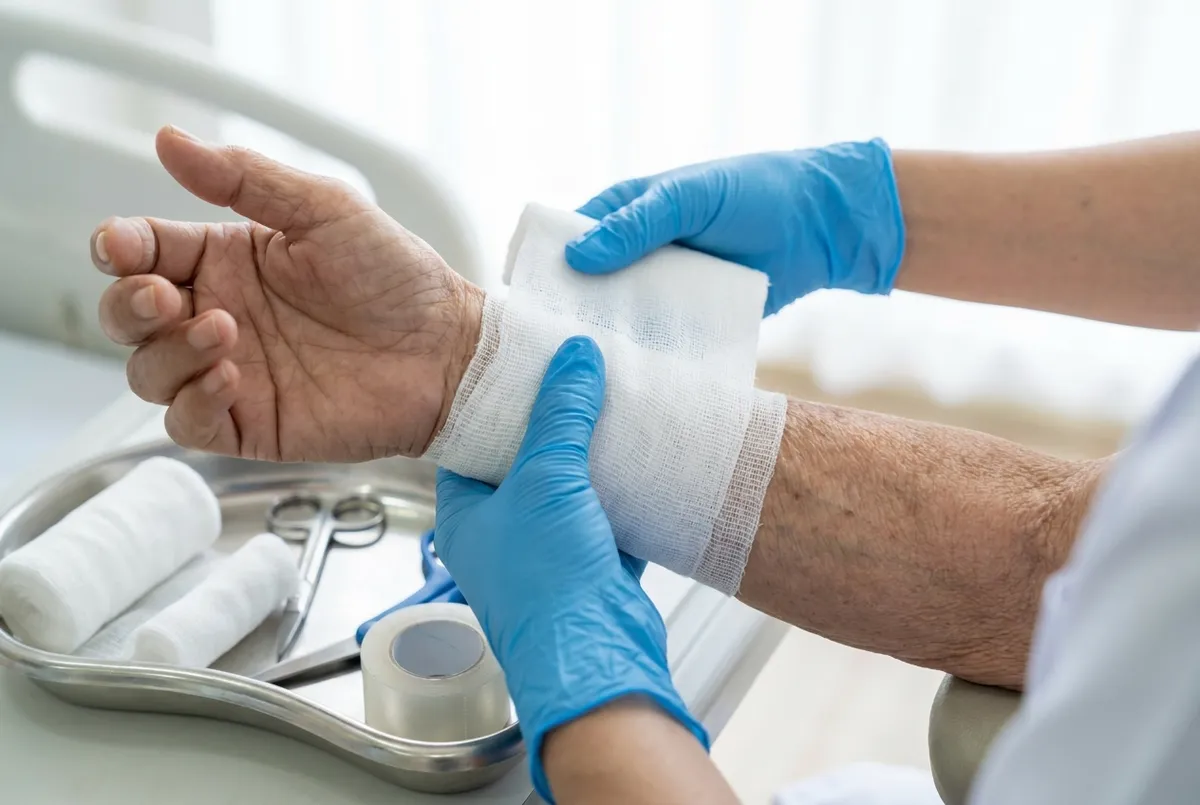
Bali is a wonderful place to live and a genuinely difficult place for a wound to heal. Heat, humidity and ever-present bacteria mean that a dressing left two days too long, or changed with kitchen-table technique, becomes an infection — I have seen it hundreds of times in twelve years. Proper wound care here is unglamorous discipline: sterile field, the right dressing material for the wound stage, strict frequency, and photographs after every change so the treating doctor can actually see the trend instead of guessing.
What's Included
Sterile Dressing Changes
Full aseptic technique at your home: cleansing, debridement-level cleaning where ordered, and modern dressing materials matched to the wound stage.
Assessment & Photo Reports
Measurement and photographs at every visit, sent to you and — with your consent — to your treating doctor, so healing is tracked, not assumed.
Pressure Sore Prevention & Care
For bed-bound clients: repositioning schedules, pressure-relief advice and careful dressing of existing sores, integrated with elderly care visits.
Suture & Drain Care
Care of sutures, staples and surgical drains; removal performed only when your doctor has ordered it in writing.
Wounds We Commonly Handle
Post-operative wounds after discharge — usually as part of post-surgery recovery care. Scooter road rash, the island classic, once a doctor has assessed it. Diabetic foot ulcers, which in this climate deserve real respect and a strict schedule. Pressure sores in elderly or bed-bound clients, often discovered during elderly home care. And burns after initial treatment at a clinic.
One honest boundary: we dress and manage wounds under a doctor's plan — we do not diagnose them. If a wound has never been seen by a doctor, we will help you arrange that first, and a clinic visit for assessment is money well spent. Where prescribed antibiotics come as injections, the same nurse can administer them — see injections & IV at home.
How We Start
Send a photo on WhatsApp
A clear photo of the wound plus your doctor's instructions if you have them. We confirm what's needed and quote the visit the same day.
First visit and assessment
The nurse assesses the wound, documents size and condition, and performs the first sterile dressing change with the materials your doctor specified.
Schedule set with your doctor
Change frequency follows the doctor's protocol — daily for some wounds, every 2–3 days for others. The plan is written and shared.
Healing tracked to closure
Photo documentation at every change shows the trend. Anything that worsens is escalated to your doctor immediately.
Pricing
A standard dressing-change visit starts from IDR 300,000 including basic consumables; complex or large wounds requiring specialised materials run IDR 400,000–500,000 per visit, quoted upfront. Daily schedules get package rates — see the pricing page.
Good to Know
How much does a wound dressing visit cost?
How often does a dressing need changing in Bali's climate?
Can you treat a wound that no doctor has seen?
Do you handle infected wounds?
Are dressing materials included?
Home Nursing Coverage in Bali
Need a Dressing Changed Properly?
Send a photo of the wound and your doctor's notes on WhatsApp — we'll tell you what it needs and have a nurse there, often the same day.
Book Wound Care